

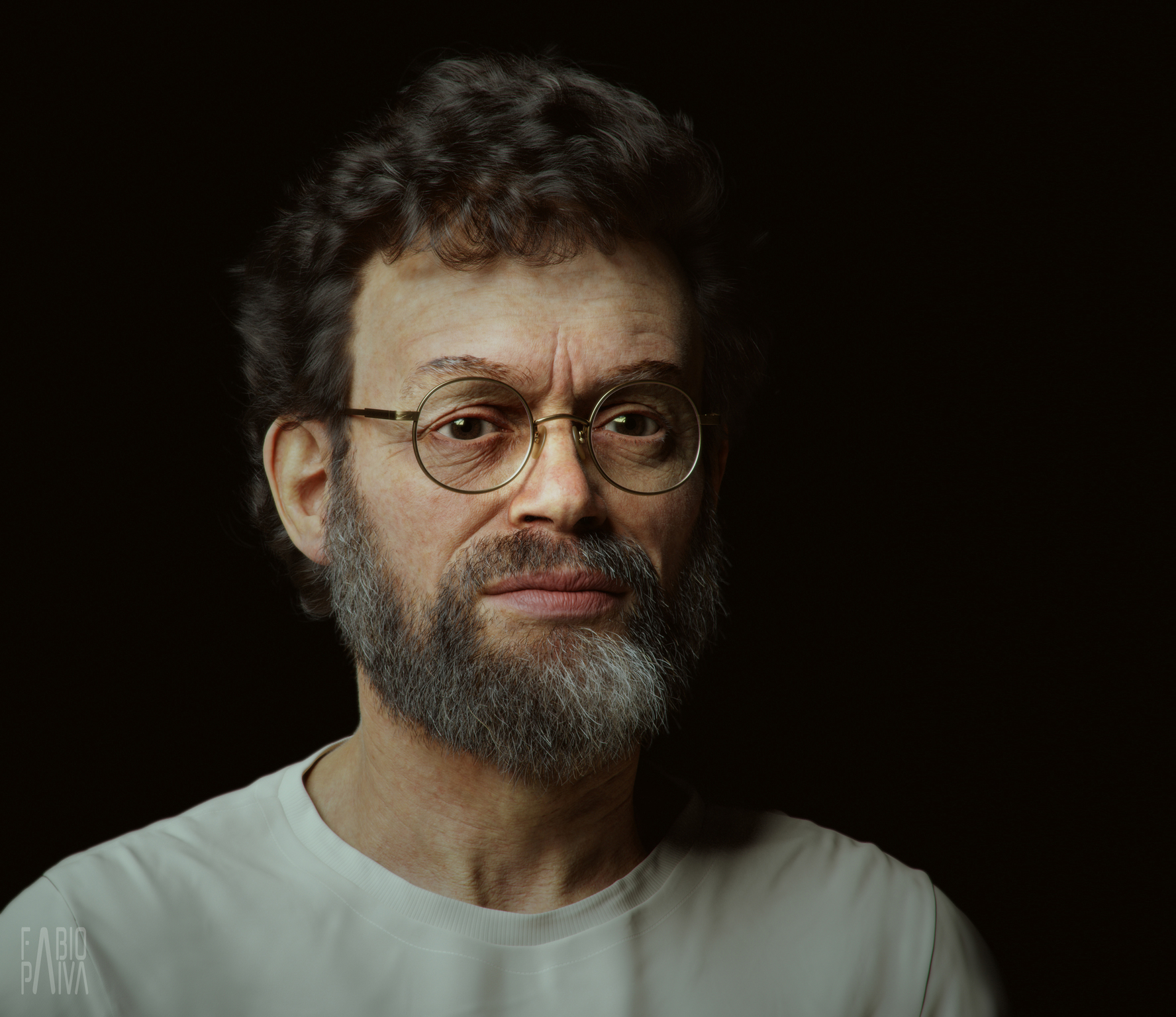
Terence McKenna
1946 — 2000
Terence McKenna (1946–2000) was the bard of the psychedelic renaissance — an ethnobotanist, philosopher, and spellbinding talker whose baroque, hilarious, erudite monologues made him, in the press's phrase, "the Timothy Leary of the '90s" and the intellectual voice of an entire counterculture. Born in the small Colorado town of Paonia, a boyhood fossil-hunter and butterfly collector, he arrived at Berkeley in 1965 and promptly outgrew every syllabus: he withdrew to wander Nepal, India, and Asia — studying shamanic traditions, collecting rare butterflies to fund the journey, and gathering the experiences that would fill his books — before returning to graduate in a self-designed major that says everything about him: ecology, resource conservation, and shamanism. The hinge of his life came in 1971, deep in the Colombian Amazon at La Chorrera, where Terence and his brother Dennis — later a distinguished ethnopharmacologist — undertook the visionary "experiment" he would recount in True Hallucinations: an encounter with the psilocybin mushroom that set the course for everything after. With Dennis he co-wrote The Invisible Landscape and, pseudonymously, one of the earliest mushroom cultivation guides; alone, he produced the works that made him famous — The Archaic Revival and Food of the Gods, his sweeping argument that psychoactive plants shaped human evolution, language, and religion, crystallised in his provocative "stoned ape" hypothesis. From the stage — Esalen, conference halls, festivals, late-night radio — he poured out ideas by the hour: novelty theory and the Timewave, the "machine elves" of the DMT realm, the felt presence of direct experience, and his great cultural challenge, "Culture is not your friend." With his then-wife, the ethnobotanist Kathleen Harrison, he also built something quietly practical: Botanical Dimensions, a nonprofit preserve in Hawaii collecting and protecting the medicinal and sacred plants — and the knowledge — of indigenous traditions. McKenna advocated, always, the responsible use of naturally occurring psychedelics — nature's own teachers, approached with courage and respect — while cheerfully inviting audiences to doubt him: he was a raconteur of ideas, not a prophet demanding belief. Diagnosed with an aggressive brain tumour in 1999, he met his death in April 2000, at fifty-three, with the same curiosity he'd brought to every other frontier. He left no polished estate — only an ocean of recorded talks that the internet has lovingly kept in circulation ever since, his papers now archived at Purdue University, Botanical Dimensions still flourishing under Harrison's care, and his brother Dennis carrying the family's work into the age of clinical psychedelic science. A quarter-century on, his most famous exhortation still lands like a hand on the shoulder of every seeker who finds him: "Nature loves courage… and find the others."